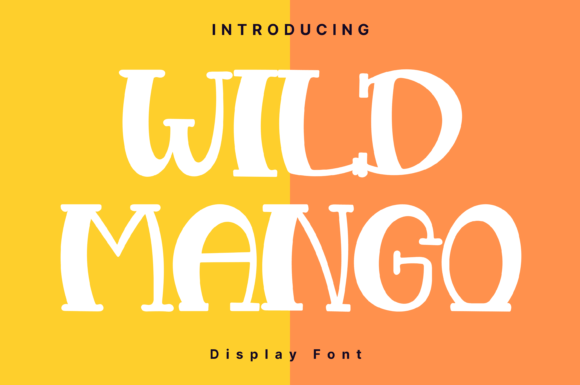
Wild Mango Font: A Handwritten Typeface for Branding
I still remember the exact moment I realized my candle business had a branding problem. I was standing at a local maker’s market, watching potential customers pick up my jars, glance at the label, and put them back down. The product inside was high-quality soy wax with premium fragrance oils, but my packaging looked generic. I had been using a standard system font that felt cold and mass-produced, completely at odds with the warm, hand-poured nature of my small business. That afternoon, I decided to stop treating typography as an afterthought and started searching for a display font that could actually tell my story. That search led me to Wild Mango, and it changed how I present my brand entirely.
Finding Personality in a Premium Display Font
As entrepreneurs, we often get bogged down in the logistics of running a business—sourcing materials, managing inventory, and handling shipping. It is easy to forget that our visual identity is the first conversation we have with a customer. When I found Wild Mango, I wasn't just looking for something "cute." I needed a handwritten font that felt whimsical yet legible, something that bridged the gap between artisanal charm and professional polish.
Wild Mango is categorized as a display typeface, which means it is designed to grab attention rather than serve as body text. Its personality is undeniably warm. The letterforms have a natural bounce and irregularity that mimics genuine handwriting without looking messy or amateurish. For my candle labels, this was the missing ingredient. It transformed a simple product name like "Lavender & Sage" from a plain descriptor into an inviting experience. The font carries a mood of approachability and joy, which is exactly what I want people to feel when they light one of my candles.
Practical Applications Across Business Materials
One of the biggest challenges in small business design is consistency. You need your Instagram posts to match your packaging, and your thank-you cards to align with your website banners. Wild Mango has proven to be incredibly versatile across all these touchpoints. Because it is a creative font with distinct character, it works best when used intentionally for specific elements rather than everywhere at once.
- Product Packaging and Labels: This is where the font truly shines. I use it for the primary product name on my jar labels and box sleeves. The playful curves stand out beautifully against minimalist backgrounds, making the product pop on a crowded shelf or a digital storefront thumbnail.
- Social Media Graphics: In a feed full of polished, corporate aesthetics, Wild Mango stops the scroll. I use it for quote overlays, announcement headers, and sale graphics. It adds a human touch to digital content that helps build community and engagement.
- Thank-You Cards and Inserts: Unboxing is a critical part of the e-commerce experience. Printing "Thank You" or "Handle with Care" in this handwritten typeface makes the insert feel like a personal note rather than a printed formality.
- Logo Design and Wordmarks: While I already had a logo, I have seen many boutique owners use Wild Mango as their primary wordmark. It is distinctive enough to serve as a standalone logotype for bakeries, beauty brands, and craft shops.
- Menus and Signage: For café owners or event planners, this font creates excellent chalkboard-style menus or directional signage. It reads clearly from a distance while maintaining a cozy atmosphere.
The Art of Font Pairing and Readability
Choosing a beautiful font is only half the battle; knowing how to pair it is what creates a cohesive brand identity. Because Wild Mango has so much personality, it needs a supporting actor that lets it shine without competing for attention. Through trial and error with my own label designs, I learned that balance is key.
For my secondary information—like scent notes, ingredients, and safety warnings—I pair Wild Mango with a clean, modern sans serif font. The contrast between the organic, bouncy script and the structured, geometric sans serif creates a layout that feels both artistic and trustworthy. Alternatively, for more editorial projects like blog headers or lookbooks, pairing it with an elegant serif font can elevate the aesthetic, adding a touch of sophistication to the whimsy.
Readability must always come first, especially for commercial products. While Wild Mango is charming, it is still a decorative display font. I avoid using it for long paragraphs or tiny legal text. On small labels, I ensure there is ample breathing room around the letters. If the text becomes too dense, the handwritten details can blur together, reducing legibility. Always test your designs at actual print size before ordering thousands of stickers or boxes. What looks bold on a 27-inch monitor might disappear on a two-inch cosmetic jar.
Elevating Brand Perception Through Typography
Typography is a silent ambassador for your brand. Before I switched to Wild Mango, my business looked like a hobby. After integrating this typeface into my visual strategy, the perception shifted. Customers began commenting on how "adorable" and "thoughtful" the packaging was. The font signaled that care went into every detail, not just the wax pouring process.
This level of polish builds trust. When a customer sees consistent, well-executed typography across your website, social media, and physical products, they perceive the business as established and reliable. It removes the friction of uncertainty. They know what to expect because the visual language is stable. For small business owners, investing in the right creative assets is often more impactful than expensive advertising. It turns passive viewers into loyal advocates simply by making the brand feel good to interact with.
Licensing and Technical Considerations for Entrepreneurs
Before you download Wild Mango and start designing, take a moment to understand the practical side of font licensing. As business owners, we must ensure we are using design assets legally and ethically. Check the license agreement carefully to confirm it covers your intended use. Most personal licenses do not cover commercial products, merchandise for sale, or client work. Investing in the proper commercial license protects your business and supports the type designer who created this beautiful tool.
Also, explore the technical features included in the font file. Many premium handwritten fonts come with OpenType features like alternates, ligatures, and swashes. These allow you to customize the flow of the text so that repeating letters don't look identical, enhancing the authentic handwritten feel. Verify multilingual support if you plan to sell internationally or cater to diverse communities. Finally, keep your font files organized and backed up. Losing access to a core brand element during a rebrand or computer migration can be a costly disruption.
Updating my brand visuals with Wild Mango was one of the most effective decisions I made for my business. It wasn't just about making things look pretty; it was about aligning my external presentation with the internal heart of my work. Whether you are redesigning a bakery menu, launching a new skincare line, or refreshing your Etsy shop, remember that typography is a powerful storytelling tool. Choose a typeface that speaks your language, and watch how it transforms not just your designs, but your connection with your customers.